Lawyers using artificial intelligence in litigation should use two independent AI agents rather than rely upon the analysis of only one. The second AI agent provides an independent means of testing the analysis, research and conclusions produced with the first AI agent before the lawyer relies upon them. But even use of two independent AI agents does not replace the lawyer’s obligation to verify the facts and the law.
The primary AI agent can read the pleadings, analyze affirmative defenses and counterclaims, research the law, compare allegations with documents, characterize transactions, identify discovery opportunities, develop arguments and analyze those arguments for weaknesses. But before that analysis is used to develop litigation documents, an independent reviewing AI agent should analyze the same source materials but without any information about the existence or work of the primary AI agent
The lawyer can then compare the two independent analyses. Agreement may provide additional confidence but does not establish that either analysis is correct. A material disagreement identifies an issue requiring further examination of the record or governing law. The lawyer must resolve those differences before relying upon the analysis to develop litigation documents.
Those litigation documents together with the original source materials should be submitted to the reviewing AI agent for an independent examination which may identify unsupported factual assertions, overlooked evidence, questionable legal conclusions, inconsistencies between the litigation documents and the record, and other matters requiring examination by the lawyer.
Lawyers have always understood the value of another set of eyes on a case. A reviewing AI agent provides a new means of obtaining that independent examination. Neither agent determines what the facts establish, what the law requires, or what position should be presented to the court. Those decisions remain the responsibility of the lawyer.
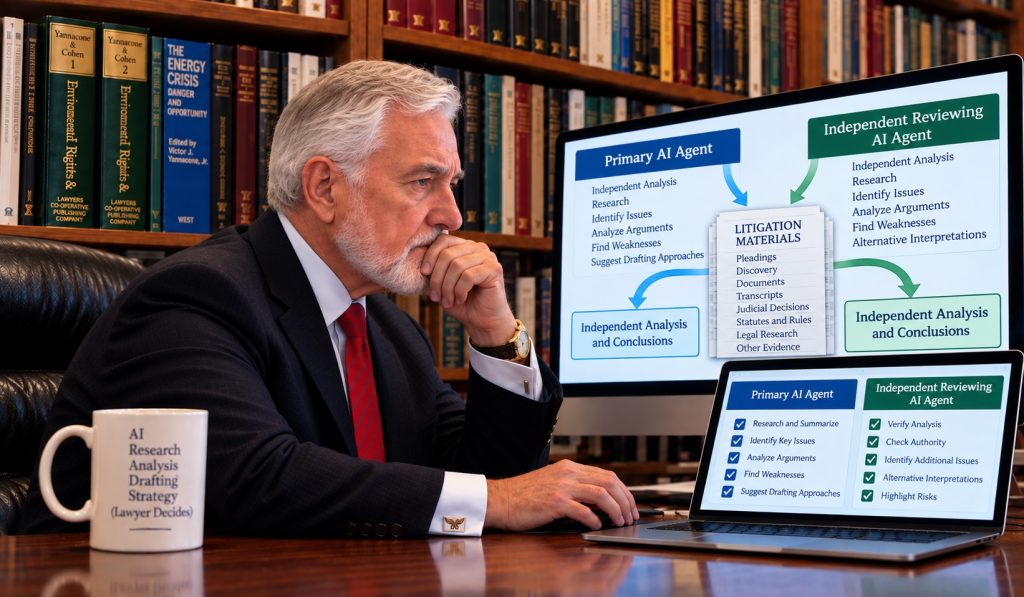
A primary AI agent and an independent reviewing AI agent separately examine the same litigation materials. The lawyer compares their analyses, verifies the facts and law, and decides.
Using Two AI Agents in Litigation
There are two different applications for an independent reviewing AI agent in litigation.
The primary AI agent assists the attorney in analyzing the litigation and ultimately in creating litigation documents.
After the reviewing AI agent completes its analysis, the lawyer compares its conclusions with those produced with the primary AI agent. The reviewing AI agent may independently identify many of the same important issues but it may also identify matters deserving additional consideration or make questionable assertions of its own. Its independent conclusions provide a means of challenging the conclusions produced with the primary AI agent.
A material disagreement identifies an issue requiring further examination. The lawyer must resolve the material differences between the two analyses by reference to the record and governing law before proceeding to prepare litigation documents.
Agreement Is Not Verification
If two AI agents agree with each other, that agreement does not necessarily establish that their common conclusion is correct. Both agents can make the same factual error, rely upon the same questionable premise, overlook the same evidence, or reach the same erroneous legal conclusion. Agreement may provide additional confidence in a conclusion, but it does not verify it.
Disagreement is more valuable. When two independent AI agents analyzing the same materials reach materially different conclusions, the disagreement identifies an issue requiring further examination. The lawyer must determine why the agents reached different conclusions and what the record and governing law actually establish.
The lawyer must still verify material facts against the record and legal propositions against the governing authority. Two AI agents provide an additional level of examination. They do not transfer responsibility for the result from the lawyer to artificial intelligence.
Independent Examination of Litigation Documents
The lawyer creates a litigation document with the assistance of the primary AI agent after resolving material differences between two independent analyses of the source materials. That litigation document begins a new examination cycle.
The primary AI agent examines the document it helped prepare against the source materials and identifies factual errors, omissions, inconsistencies, unsupported propositions, questionable legal conclusions and weaknesses in the arguments presented. The lawyer considers that examination and makes any necessary corrections. The reviewing AI agent then independently examines the litigation document against the original source materials without receiving the examination performed by the primary AI agent or being told what conclusions it reached.
The lawyer then compares the two examinations. Any material discrepancy must again be resolved by reference to the record and governing law. If that process results in a material revision of the document, the examination process repeats and continues until the lawyer is satisfied that the document is supported by the record and governing law.
The procedure is iterative because litigation itself is an iterative process. Each pleading, motion, discovery demand, response, memorandum, affidavit or other litigation document may introduce new factual assertions, legal propositions, arguments or strategic choices requiring examination. New evidence, discovery, judicial decisions and opposing arguments may also require earlier conclusions to be reconsidered.
Why Lawyers Should Use Two AI Agents
Artificial intelligence increases the amount of information a lawyer can examine and the speed with which that information can be analyzed. It does not eliminate the possibility of error. It can make error more difficult to recognize because an erroneous analysis can be detailed, internally consistent and persuasive.
Relying upon the primary AI agent to produce an analysis and then test that analysis risks permitting the same assumptions, interpretations and reasoning that produced an error to influence the attempt to find it.
Lawyers should use two AI agents in litigation. One should serve as the primary AI agent assisting the lawyer, and the other as an independent reviewing AI agent. The AI agents analyze and suggest. The lawyer verifies and decides. AI agents analyze and suggest. The lawyer verifies and decides.
Attorneys must still do what attorneys have always been required to do. Decide for themselves.
This article builds upon Artificial Intelligence in Litigation Without Letting It Practice Law, which explains how attorneys can use artificial intelligence in litigation while retaining responsibility for verifying the facts, law and sources and making every legal judgment.
Permission to Repost. You may reproduce this article in its entirety on social media, blogs, and other websites without requesting additional permission, provided the article is reproduced in full without alteration, identifies Victor John Yannacone, Jr. as the author, and includes a prominent link to the original article on this website.
Lawyers Should Use Two AI Agents in Litigation
September 2, 2026 | AI in litigation
Lawyers using artificial intelligence in litigation should use two independent AI agents rather than rely upon the analysis of only one. The second AI agent provides an independent means of testing the analysis, research and conclusions produced with the first AI agent before the lawyer relies upon them. But even use of two independent AI agents does not replace the lawyer’s obligation to verify the facts and the law.
The primary AI agent can read the pleadings, analyze affirmative defenses and counterclaims, research the law, compare allegations with documents, characterize transactions, identify discovery opportunities, develop arguments and analyze those arguments for weaknesses. But before that analysis is used to develop litigation documents, an independent reviewing AI agent should analyze the same source materials but without any information about the existence or work of the primary AI agent
The lawyer can then compare the two independent analyses. Agreement may provide additional confidence but does not establish that either analysis is correct. A material disagreement identifies an issue requiring further examination of the record or governing law. The lawyer must resolve those differences before relying upon the analysis to develop litigation documents.
Those litigation documents together with the original source materials should be submitted to the reviewing AI agent for an independent examination which may identify unsupported factual assertions, overlooked evidence, questionable legal conclusions, inconsistencies between the litigation documents and the record, and other matters requiring examination by the lawyer.
Lawyers have always understood the value of another set of eyes on a case. A reviewing AI agent provides a new means of obtaining that independent examination. Neither agent determines what the facts establish, what the law requires, or what position should be presented to the court. Those decisions remain the responsibility of the lawyer.
A primary AI agent and an independent reviewing AI agent separately examine the same litigation materials. The lawyer compares their analyses, verifies the facts and law, and decides.
Using Two AI Agents in Litigation
There are two different applications for an independent reviewing AI agent in litigation.
The primary AI agent assists the attorney in analyzing the litigation and ultimately in creating litigation documents.
After the reviewing AI agent completes its analysis, the lawyer compares its conclusions with those produced with the primary AI agent. The reviewing AI agent may independently identify many of the same important issues but it may also identify matters deserving additional consideration or make questionable assertions of its own. Its independent conclusions provide a means of challenging the conclusions produced with the primary AI agent.
A material disagreement identifies an issue requiring further examination. The lawyer must resolve the material differences between the two analyses by reference to the record and governing law before proceeding to prepare litigation documents.
Agreement Is Not Verification
If two AI agents agree with each other, that agreement does not necessarily establish that their common conclusion is correct. Both agents can make the same factual error, rely upon the same questionable premise, overlook the same evidence, or reach the same erroneous legal conclusion. Agreement may provide additional confidence in a conclusion, but it does not verify it.
Disagreement is more valuable. When two independent AI agents analyzing the same materials reach materially different conclusions, the disagreement identifies an issue requiring further examination. The lawyer must determine why the agents reached different conclusions and what the record and governing law actually establish.
The lawyer must still verify material facts against the record and legal propositions against the governing authority. Two AI agents provide an additional level of examination. They do not transfer responsibility for the result from the lawyer to artificial intelligence.
Independent Examination of Litigation Documents
The lawyer creates a litigation document with the assistance of the primary AI agent after resolving material differences between two independent analyses of the source materials. That litigation document begins a new examination cycle.
The primary AI agent examines the document it helped prepare against the source materials and identifies factual errors, omissions, inconsistencies, unsupported propositions, questionable legal conclusions and weaknesses in the arguments presented. The lawyer considers that examination and makes any necessary corrections. The reviewing AI agent then independently examines the litigation document against the original source materials without receiving the examination performed by the primary AI agent or being told what conclusions it reached.
The lawyer then compares the two examinations. Any material discrepancy must again be resolved by reference to the record and governing law. If that process results in a material revision of the document, the examination process repeats and continues until the lawyer is satisfied that the document is supported by the record and governing law.
The procedure is iterative because litigation itself is an iterative process. Each pleading, motion, discovery demand, response, memorandum, affidavit or other litigation document may introduce new factual assertions, legal propositions, arguments or strategic choices requiring examination. New evidence, discovery, judicial decisions and opposing arguments may also require earlier conclusions to be reconsidered.
Why Lawyers Should Use Two AI Agents
Artificial intelligence increases the amount of information a lawyer can examine and the speed with which that information can be analyzed. It does not eliminate the possibility of error. It can make error more difficult to recognize because an erroneous analysis can be detailed, internally consistent and persuasive.
Relying upon the primary AI agent to produce an analysis and then test that analysis risks permitting the same assumptions, interpretations and reasoning that produced an error to influence the attempt to find it.
Lawyers should use two AI agents in litigation. One should serve as the primary AI agent assisting the lawyer, and the other as an independent reviewing AI agent. The AI agents analyze and suggest. The lawyer verifies and decides. AI agents analyze and suggest. The lawyer verifies and decides.
Attorneys must still do what attorneys have always been required to do. Decide for themselves.
This article builds upon Artificial Intelligence in Litigation Without Letting It Practice Law, which explains how attorneys can use artificial intelligence in litigation while retaining responsibility for verifying the facts, law and sources and making every legal judgment.
Permission to Repost. You may reproduce this article in its entirety on social media, blogs, and other websites without requesting additional permission, provided the article is reproduced in full without alteration, identifies Victor John Yannacone, Jr. as the author, and includes a prominent link to the original article on this website.